Brand Licensing
 Every day, a battle is fought in the carts and aisles of the supermarkets all over the world. Brands fight for shelf space and wish to find a spot in the shopper’s cart.
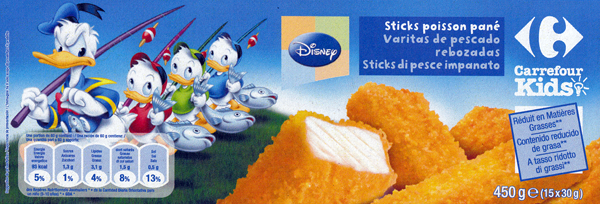
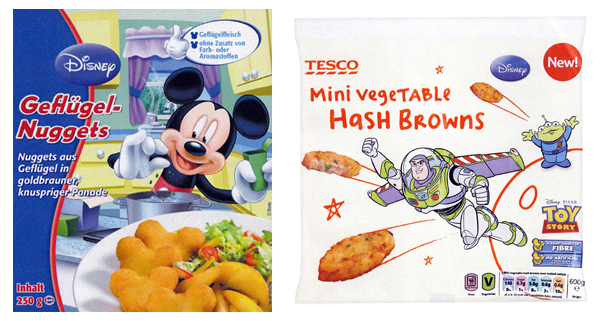
Licensing means renting or leasing of an intangible asset. Examples of intangible assets include a song (Somewhere Over The Rainbow), a character (Donald Duck), a name (Michael Jordan) or a brand (The Ritz-Carlton). An arrangement to license a brand requires a licensing agreement.
A licensing agreement authorizes a company which markets a product or service (a licensee) to lease or rent a brand from a brand owner who operates a licensing program (a licensor).
The main reason companies choose to brand license their products is to differentiate them from their competitors’ products. When executed properly, licensing allows a product to leverage an existing brand’s attributes while mitigating some of the risks associated with building a new brand from scratch or the cost of deploying additional media against a current brand.
The primary reward of licensing can be summed up in one word: leverage. Leveraging another brand through licensing reduces some of the risks and costs associated with building a brand from scratch. While large CPG firms dedicate years—and millions of dollars—to developing and launching a new brand, most of new products launched in supermarkets still fail despite that considerable investment.
10 Benefits Of Brand Licensing – Source: Branding Strategy Insider
1. Brand Managers to extend their brands with minimal investment. Through the licensing arrangement, third party manufacturers are responsible for everything from product development to inventory management to store replenishment.
2. The brand to obtain supplementary marketing support. For the right to use the brand in their category, the manufacturer must agree to spend a percentage of their net sales on marketing. This marketing commitment not only supports the category licensed, but can be significant to the overall brand.
3. Trademark protection in the category. For a brand to benefit from trademark protection in a particular category, it must be actively sold in that category. If the category lies vacant, others may claim rights to use the mark. Extending a brand into a category via licensing helps brand owners meet the commerce standard.
4. Increased consumer connections and insights in the categories being licensed. Extending a brand via licensing offers thousands of incremental opportunities to connect with consumers. By inserting a survey inside the licensed package or a toll free number on the exterior, a brand owner can gain many additional insights about the brand.
5. A brand to gain incremental shelf space. If a brand owner chooses to extend a brand via licensing into a new category, the brand gains tremendous additional exposure in those categories in every retail store the product is sold. When sold into major chain retailers, the brand can gain thousands of additional feet of brand exposure in each category.
6. Entrée into new distribution channels. By licensing the brand to a manufacturer which currently sells into a retail channel where the brand currently does not have a presence, the brand can gain access to that channel via the licensing relationship.
7. The brand to enter new regions. Similar to new channel access, a brand can gain entrée into new regions via a manufacturer which has a presence in regions where the brand is currently not sold.
8. Access to patented technology. Many companies which choose to license brands offer proprietary innovation to the brand owner. When the patented technology reinforces the brand’s position, the new product offered can be met with tremendous consumer appreciation and pent up demand.
9. Knowledge transfer from the manufacturing partners who license the brand. A licensing arrangement provides the opportunity for the brand owner and the manufacturer to share insights and knowledge across multiple disciplines including product development, marketing, R&D and sales.
10. The brand owner to capture royalty revenue through the manufacturer’s sales of licensed product. This symbiotic relationship helps to create new products for the marketplace that consumers crave. For every dollar in revenue generated by the manufacturer, the brand owner receives a percentage in royalty payments, most of which go straight to the bottom line.
-Pete Canalichio, Chief Brand Licensing Strategist, The Blake Project
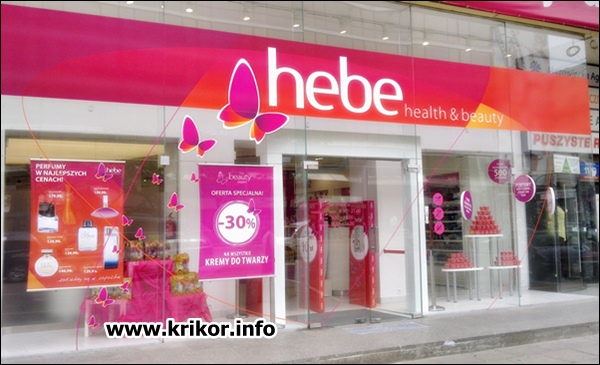
 Before discovering what hebe means, I thought that it is the combination of the first 2 letters of health and beauty, then to find out that hebe drugstores got their name from the name of Greek goddess, in the mythology that is the epitome of eternal beauty.
 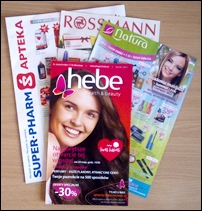 The store is spacious, compared to other drugstores, there is enough room between the shelves and the different categories, they are using shelves management system for well-ordered displays, excellent lighting reflecting on the white tiles. They have a very beautifully designed shopping baskets, but store security did not allow to take photos.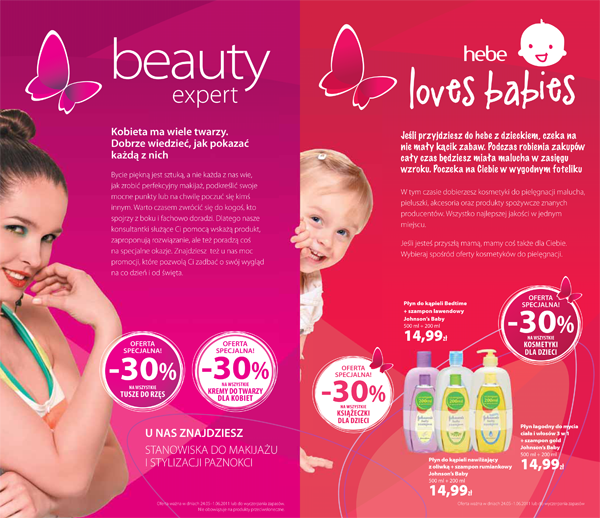
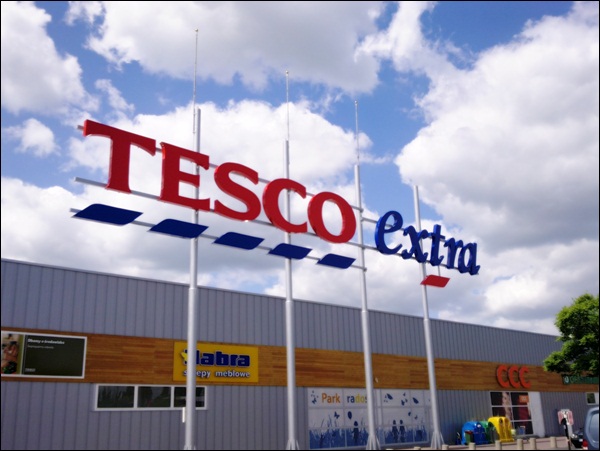
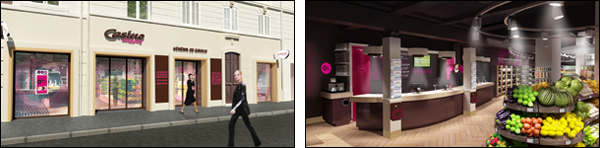
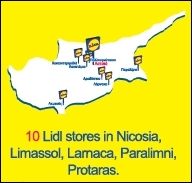 In October 2010,
 Petit Casino, flagship of proximity stores of
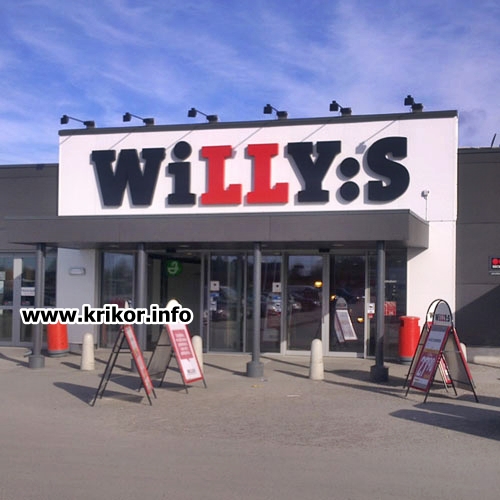
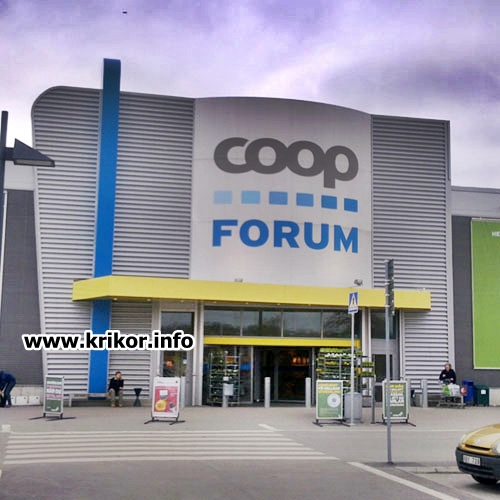

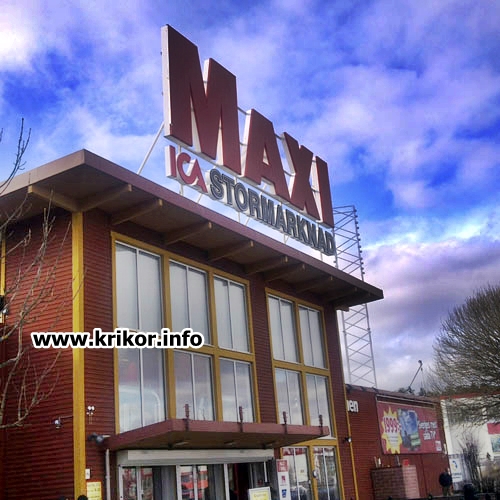

 The war is going on between the retailers (supermarkets and hypermarkets) and the suppliers (brand principles) and if you are wondering why, it is because of the non-stop products price increase.
 Despite the constantly rising number of stores in Romania, Carrefour, the largest hypermarket operator in the country, did not succeed in increasing its revenues over the last two years. The company earned €1.13bn in 2010, a 0.4% reduction in comparison with the previous year and 5% less than 2008, its record year in Romania in terms of sales. With 15 stores more in 2010 than in 2008, representing an investment of about €60m between them.
 In 2010, Carrefour opened 10 supermarkets and one hypermarket, the latter in the city of Drobeta-Turnu Severin, in south-western Romania. On the other hand, the company closed three supermarkets in the country in 2010, one each in Hunedoara, Baia Mare and Turda, as part of its strategy of optimising its operations. Carrefour had 55 stores on the Romanian market at the end of 2010, of which 23 were hypermarkets and 32 supermarkets.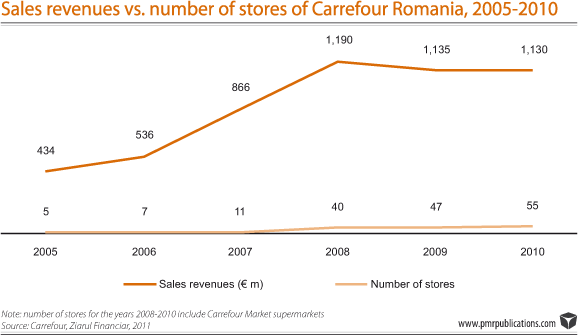
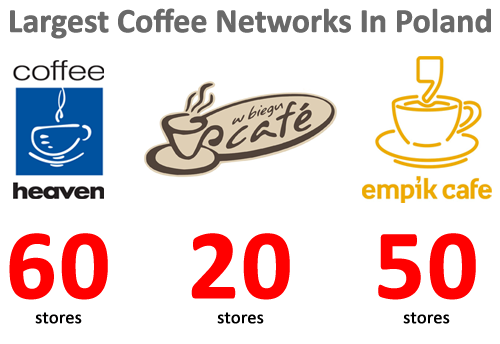
 Starbucks, the world famous coffee bar network, is planning to speed up its expansion on the Polish cafe chain market, which is worth PLN 1.5bn (€390m). By the end of 2010 the company intends to have set up five new cafes in Poland. At present, it manages five establishments in the largest Polish cities.