10 tips for naming your company, product, or service
First, to get an idea of how much money and time big corporations spend on name development, check out Valleywag’s post about how AOL named its new search service (thanks to Brady Forrest for sending this link). They “engaged a top-tier naming agency” (which, coincidentally, The Name Inspector used to work for), considered more than a hundred name candidates, and settled on the name FullView. It might seem like a lot of trouble and expense for a not-so-interesting result. Your average startup or other small-to-medium business isn’t going to be able to swing that.
Fortunately, there’s no magic to naming. Why fortunately? Because that means anyone can do it. It doesn’t mean it’s easy to do a good job, though. These tips might help a little.
1. Quantity and diversity yield quality
Naming is a matter of satisfying many competing constraints. Ideally a name is relevant, positive, memorable, reasonably short, not too generic, not too similar to a competing name, associated with an available domain name, and distinctive enough to bring your web page to the top of search engine results. The odds are against having a name just pop into your head that satisfies all these constraints. That means the most effective way to come up with a name is to think of lots of different ideas, carefully screen and choose, and repeat. A good metaphor for the naming process is evolution through variation and natural selection.
2. Selection is as important as creation
In all evolutionary processes, selection is more important than the initial causes of variation. So it is with naming. It doesn’t matter how you come up with your ideas for names, as long as you have some great ones to choose from. (Fortunately, the process that leads to variation in name ideas is not random, like genetic mutation. There are things you can do to increase your chances of having good ideas.) It’s important to realize that evaluating your name ideas and choosing the one that really works is as important to the naming process–and takes as much work–as coming up with name ideas in the first place.
3. Try different types of name
One good way to increase your chances of having great name ideas is to try creating different types of name. You might start with The Name Inspector’s classification of names and try to think of something in each category. This will make you consider possibilities you otherwise might overlook, and will help you learn what kind of name is right for your company, product, or service.
4. Use collective intelligence
Another good way to diversify your pool of name ideas is to have lots of people contribute. They can help both by suggesting names and by critically evaluating others’ name ideas. Other people will notice gems that you ignored, and duds that you’re attached to for your own idiosyncratic reasons.
5. Use linguistic resources
What goes for names also goes for the raw linguistic material that you use to create names. It’s unlikely that just the right word is going to pop into your head to serve as the basis for a blend, a compound, or some other type of put-together name. It helps to have lots of relevant words presented to you quickly so that you can select from among them. A thesaurus helps a lot. You might use a fancy online tool like the Visual Thesaurus, but a good old copy of Roget’s does very nicely.
6. Do exercises to explore connections to relevant concepts
Creative professionals, especially namers, love making mind maps and doing other exercises to break their habits of thought and explore connections that would not otherwise occur to them. You should do this, too. Start with a clear understanding of what your company/product/service does and how it benefits people. Then think of things that are indirectly associated with these ideas. Include some things that are visually distinctive (logo material). Also try to think of things that can represent a function or benefit metaphorically. Good metaphors make abstract ideas tangible and obscure ideas clear–consider the way the flake metaphor in the name PageFlakes helps people understand what an Ajax homepage is like. Finally, some simple free association never hurts.
7. Pictures are important, even when you’re just thinking of words
Often what makes a name good is the fact that it gives people a mental image that helps them understand how something works or what benefits it provides. Ideas are more interesting and easier to remember when they’re associated with sensory, especially visual, experience. That means when you’re coming up with name ideas, sometimes it’s best to start with a visual image and then think of the language that goes with it. With a visual dictionary you can look at pictures of complex objects and physical settings that have all their individual parts labeled.
8. To avoid embarrassment in other languages, ask the experts
If you’re releasing something on a global scale and are concerned about what your name might mean in other languages, there’s simply no way to get around asking native speakers. Nothing else will work. One native speaker’s opinion is worth more than any amount of research you might do using dictionaries or online resources. If this is an issue and you can’t afford to hire a naming firm to screen the name for you, try to identify the main languages you’re concerned about (start with the ones with the most speakers in your market, obviously) and find speakers yourself. Try friends of friends. Try online social networks. Try a university with international students.
9. Forget etymology
Maybe it’s shocking for The Name Inspector to say this, but the etymologies of words or word parts that you use in your name don’t matter. What do matter are the associations people make. Sometimes there’s an overlap between the two, though. For example, many people recognize that -lumin- relates to light, and it in fact comes from the Latin word for light. However, most people don’t make the association to light because of their knowledge of Latin or etymology. They make it because they know words like luminous and illuminate and recognize the word part. In general, etymological meaning connections only come through when they’re also part of the living language.
10. Know when to let go
Because naming is about satisfying constraints, it’s important to know when to let go of a favorite idea that won’t work. Suppose you really want to use the word meme in your name, but you want to have a distinctive name and three competitors already have names built around that word. Forget meme and move on.
Post Source TheNameInspector.com
 John Quelch was one of ten marketing experts profiled in the 2007 book, Conversations with Marketing Masters, authored by Laura Mazur and Louella Miles. A professor at Harvard Business School since 1979, he is known worldwide for his research on global marketing, global branding and marketing communications.




















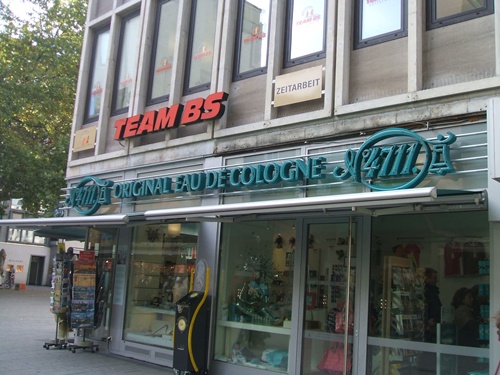
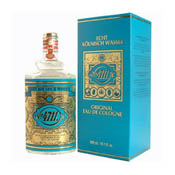 4711 Original Eau de Cologne is one of the oldest brands and benefits from exceptional name recognition throughout the world. Users rate it as “the mother of all Eau de Cologne”. The secret formula for 4711 Original Eau de Cologne is still appreciated across the globe to this day and makes the “aqua mirabilis” an absolute classic without comparison.